




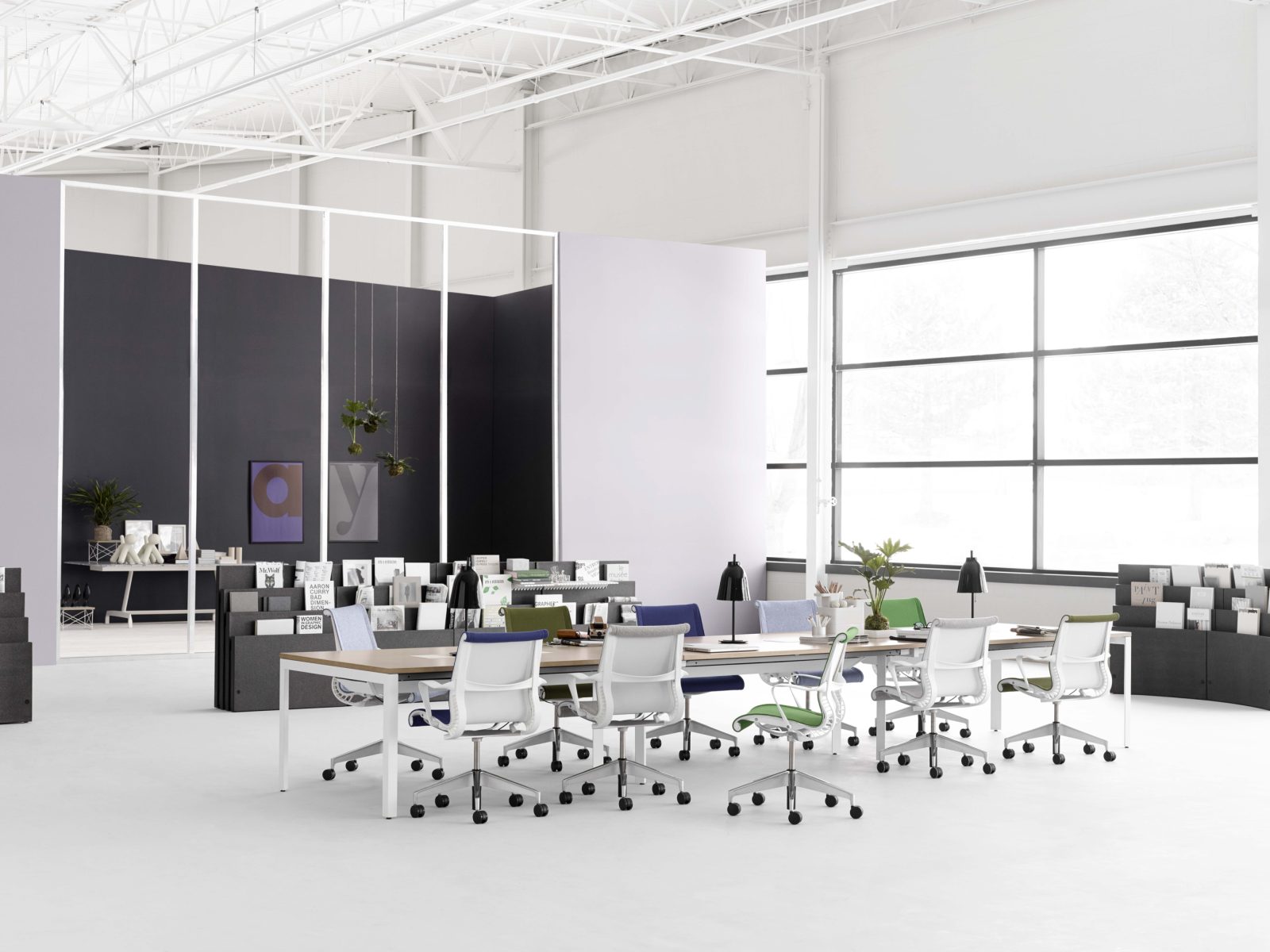
Workplaces That Last
Sustainability is no longer a buzzword - it’s a business imperative. Employees expect their organizations to lead on climate action. Investors and stakeholders demand measurable impact. Clients and partners evaluate vendors on their environmental footprint. For workplace decision-makers, the question isn’t if to integrate sustainability, but how.

At MOI, we’ve seen firsthand how sustainable practices elevate not only the planet but also people and performance. Here’s how organizations can put sustainability into practice in their workplaces—without sacrificing design, function, or budget.
Choosing Materials That Matter
Every product decision has an impact. From fabrics to finishes, sustainable materials are reshaping how offices are built:
- Low-VOC finishes improve indoor air quality and occupant well-being.
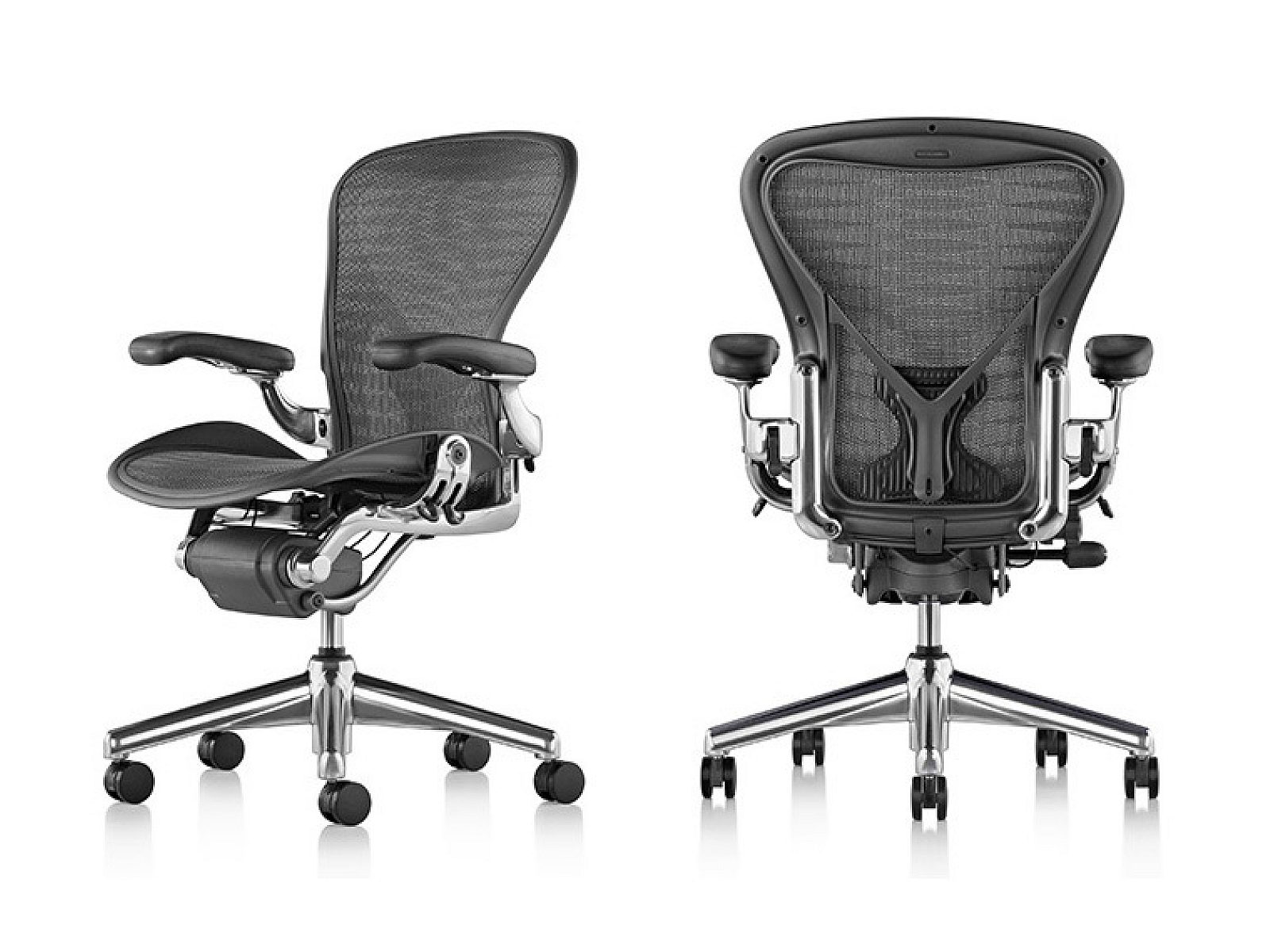
- Recycled and recyclable materials reduce waste while still delivering high design.
- Rapidly renewable resources (like bamboo) minimize environmental impact.
Clients are increasingly asking not only what looks good but what lasts responsibly. MOI partners with manufacturers who share this commitment, ensuring choices align with both design vision and sustainability goals.
Designing for Longevity, Not Landfill
The greenest office isn’t the one that’s constantly torn down and rebuilt. True sustainability means designing spaces that last.
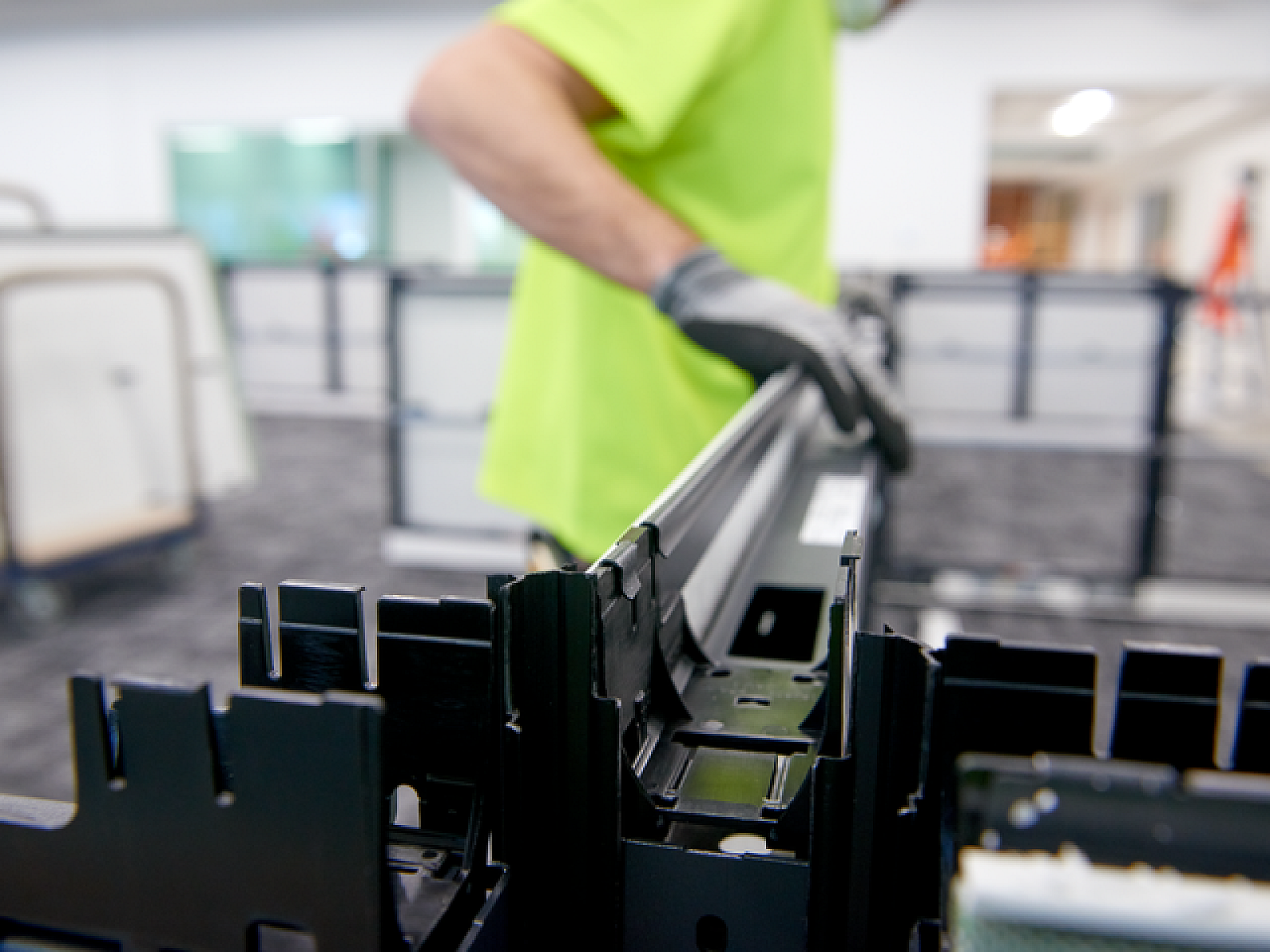
- Modular furniture and demountable walls allow organizations to reconfigure instead of renovate.
- Timeless finishes and adaptable layouts extend the lifespan of the workplace.
- Service and support partnerships keep products in use longer through refurbishment and repair.
- This shift from a “disposable” mindset to a “durable” one ensures workplaces adapt to change while reducing waste.
Energy and Resource Efficiency
Design decisions directly influence energy usage. From lighting to HVAC, small shifts add up:
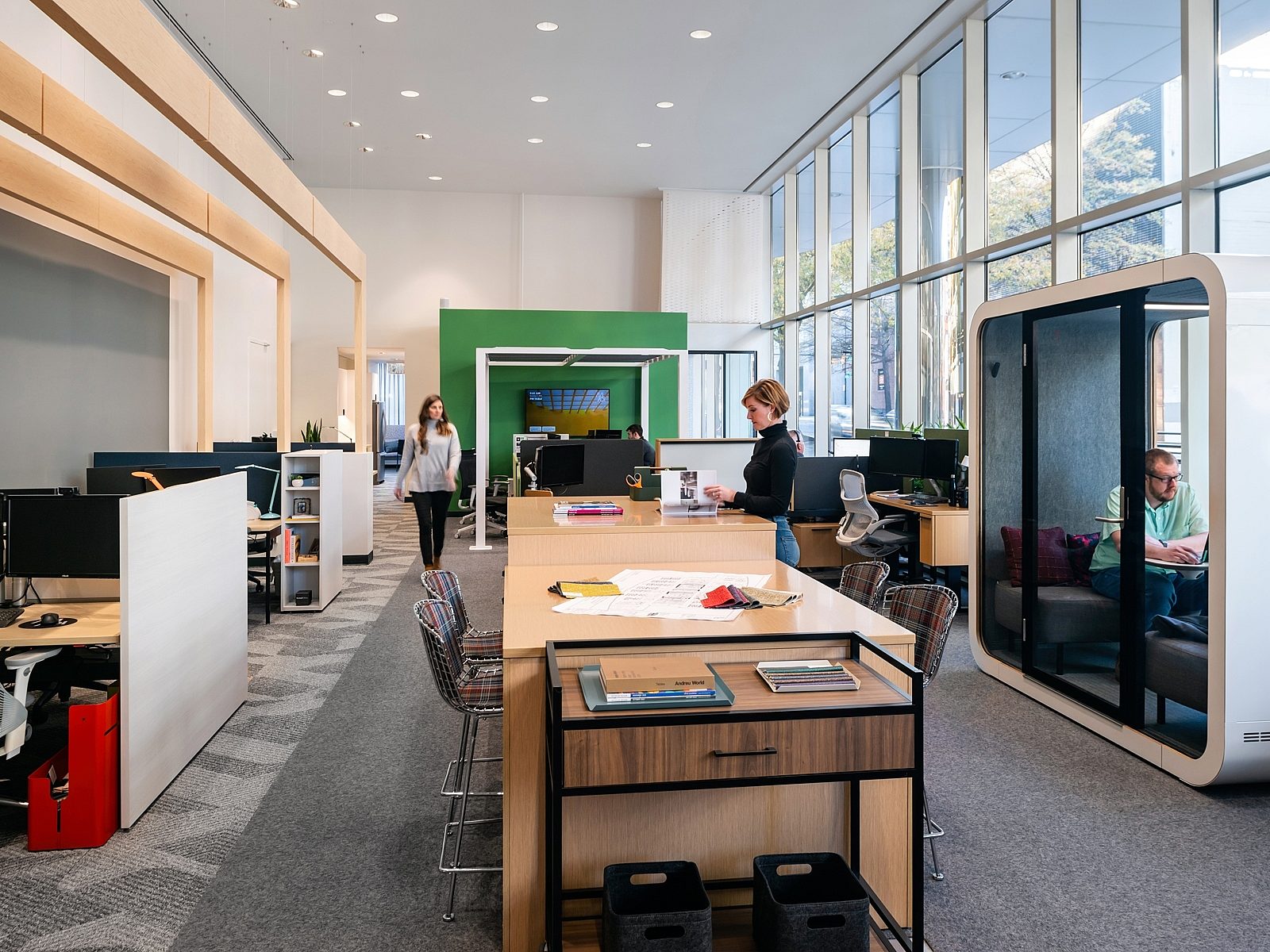
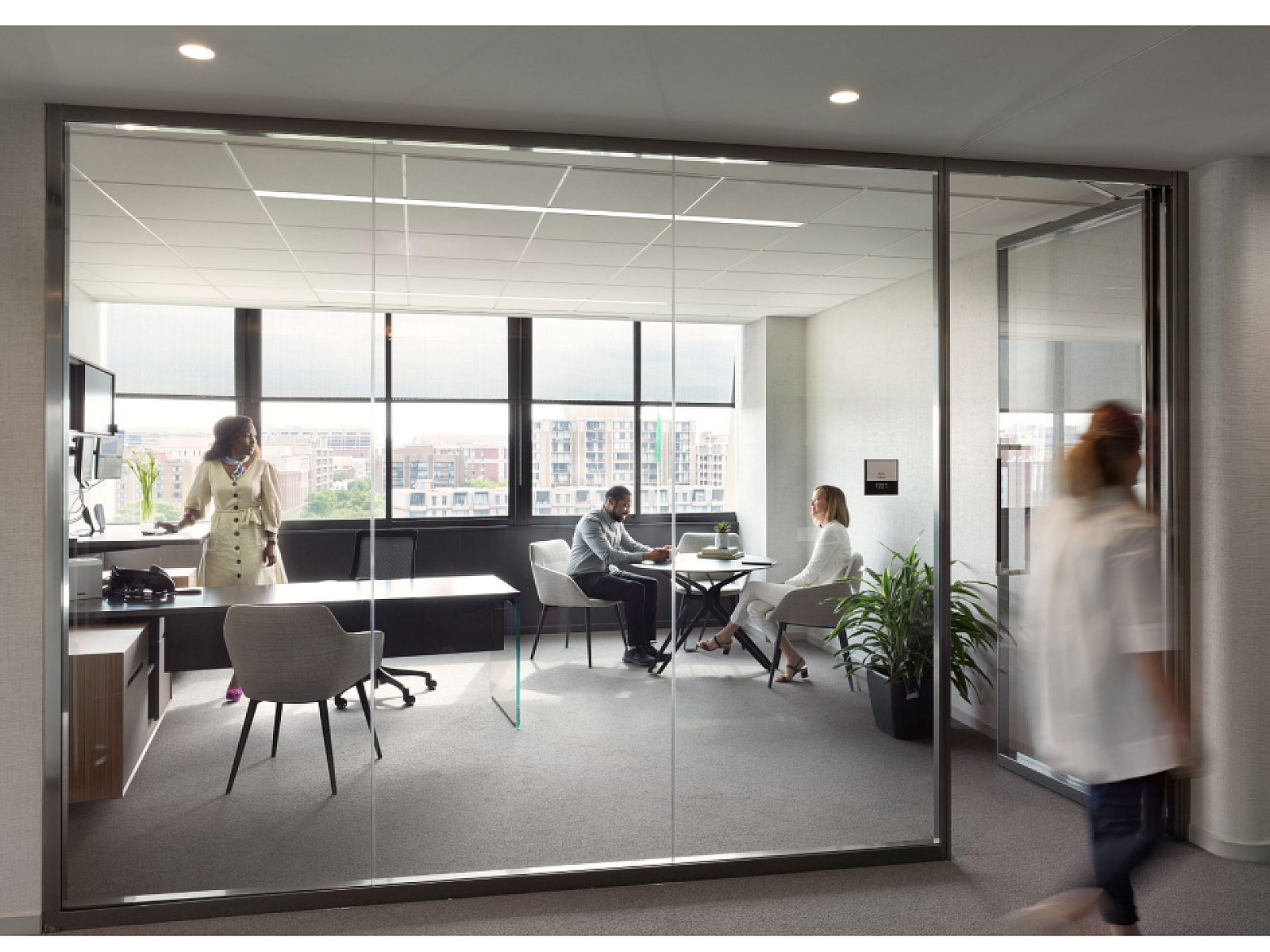
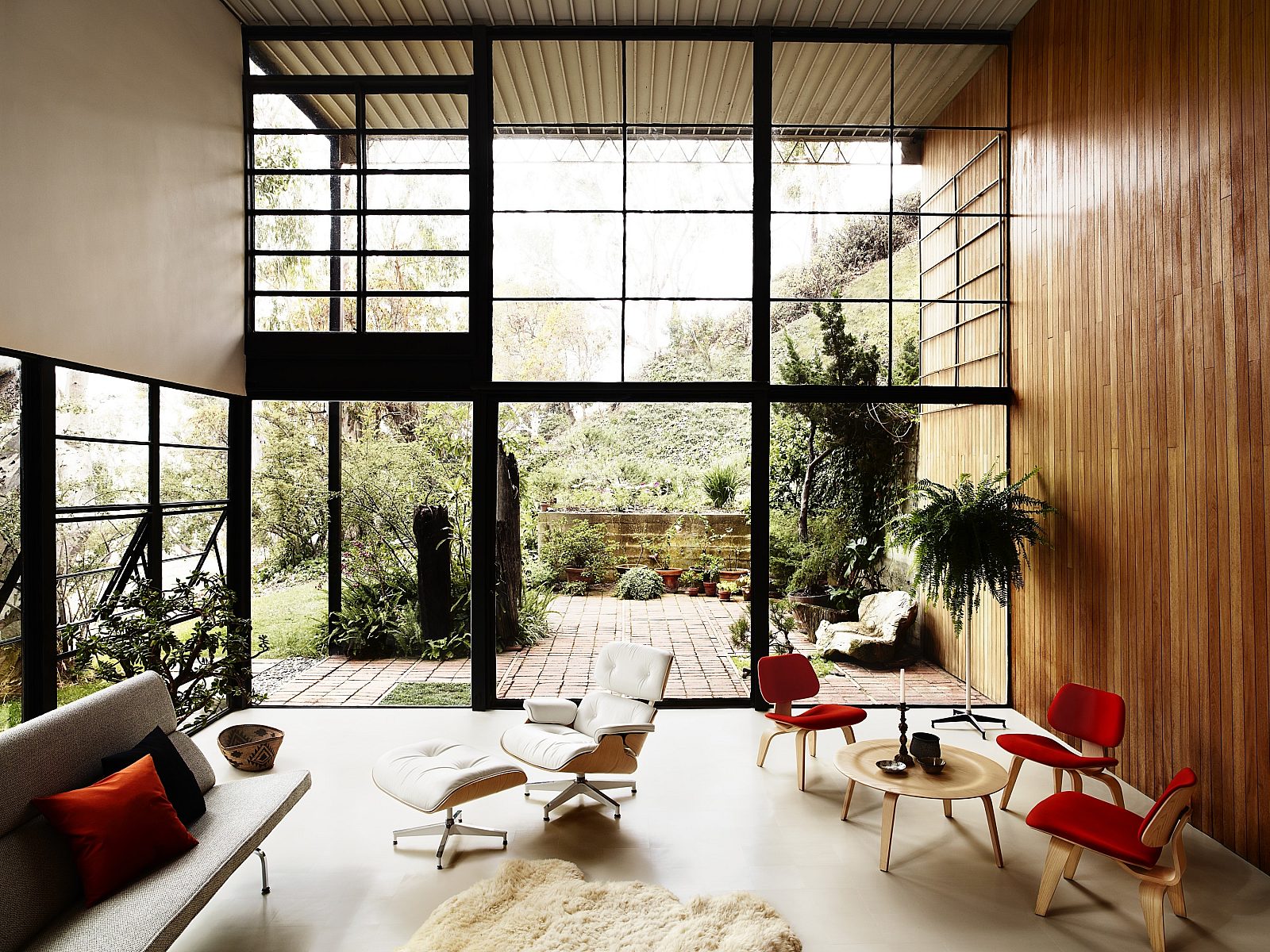
Daylighting strategies and furniture placement maximize natural light, reducing reliance on electricity.
- Acoustic solutions improve thermal performance as well as sound control.
- Smart systems integrate with architectural choices to optimize heating, cooling, and lighting.
- Sustainable design isn’t just environmentally responsible—it’s fiscally smart. Many organizations see ROI through lower operating costs.
Certifications That Signal Commitment
Frameworks like LEED, WELL, and Fitwel provide third-party validation of sustainable workplaces. They measure everything from energy performance to occupant well-being. While not every project seeks certification, the principles behind them guide decisions:
- LEED prioritizes resource efficiency.
- WELL focuses on health and well-being.
- Fitwel emphasizes social responsibility and occupant comfort.
MOI supports clients in aligning design strategies with these frameworks, whether or not certification is the end goal.
Culture and Communication
A sustainable workplace is about more than materials—it’s about mindset. Employees engage more deeply when they understand their company’s commitment. MOI helps clients:
- Design visible sustainability stories (e.g., signage that highlights recycled materials).
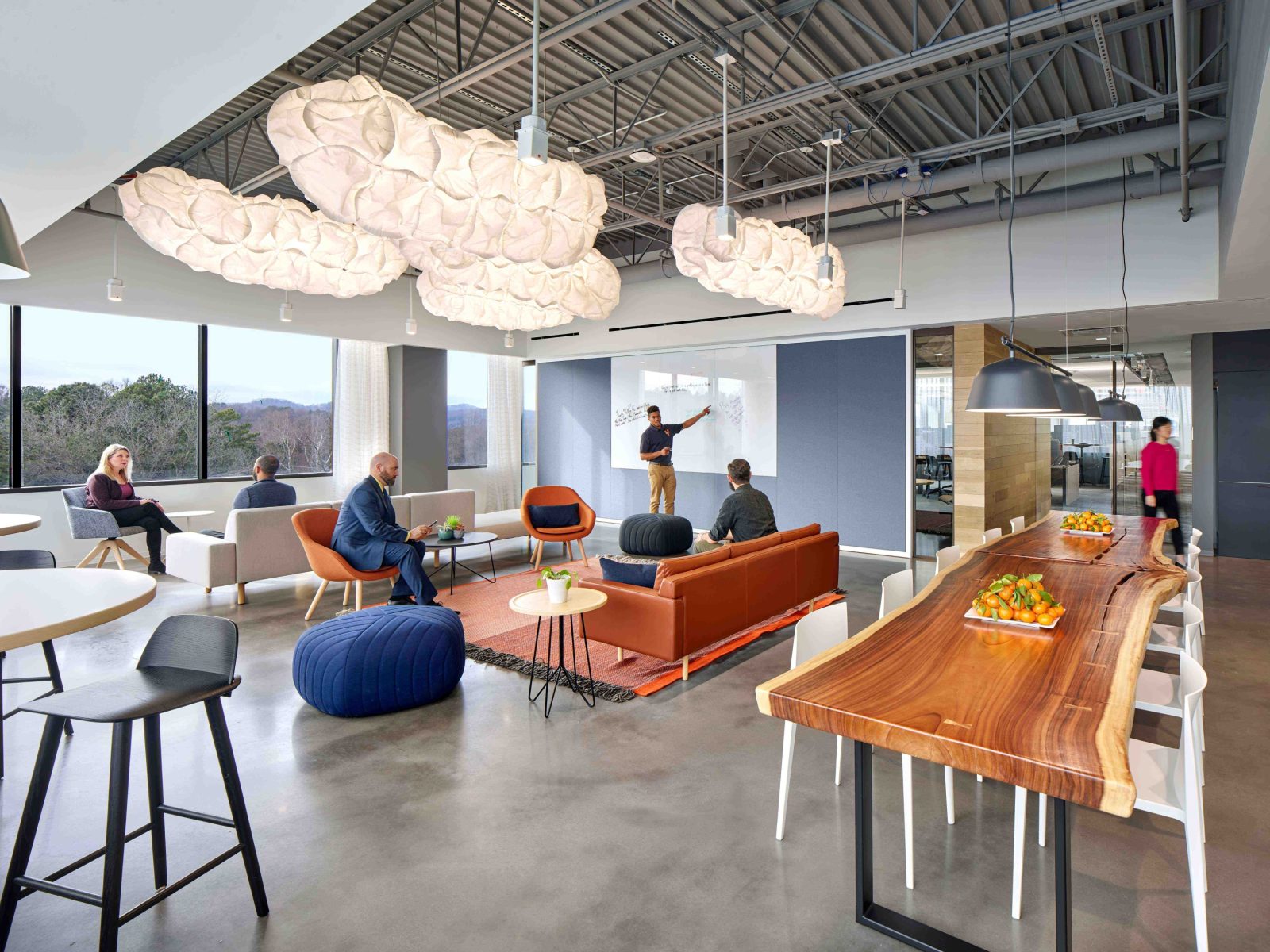
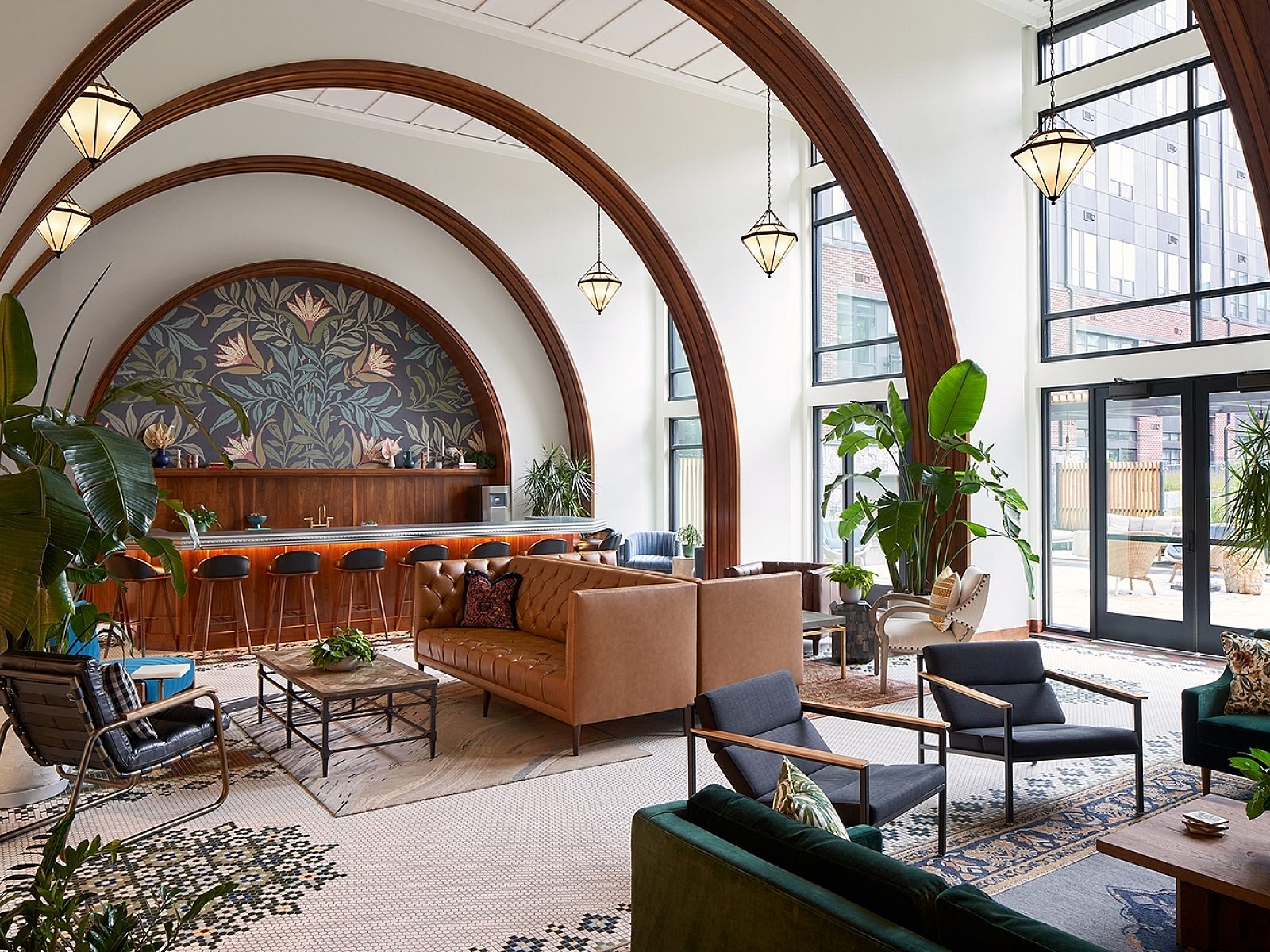
- Incorporate greenery and natural elements that remind employees of their connection to the environment.
- Engage employees in change management so they see themselves as part of the solution.
When organizations live their sustainability story, it drives pride, engagement, and retention.